The court also restrained the CBN, its appointees, and agents from taking any further steps, including actions related to the bank’s proposed recapitalisation or any associated measures.
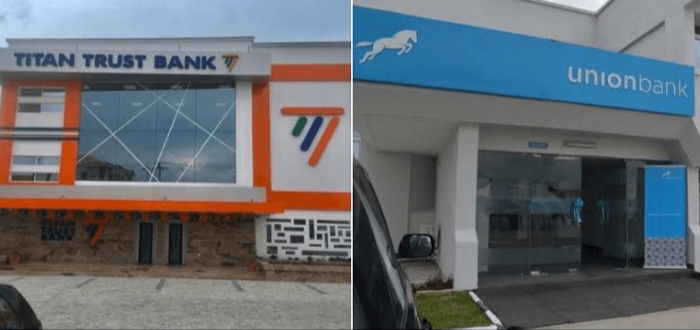
The judge made the declarations in a judgment delivered in a suit marked: FHC/L/MISC/1377/2025, filed by the bank’s core shareholders, Titan Trust Bank, Luxis International, and Magna International.
The shareholders challenged the legality of the CBN’s action, which involved dissolving Union Bank’s leadership and installing a new management team led by Ms Yetunde Oni as managing director/CEO and Mannir Ringim as executive director.
In their suit, the shareholders argued that the removal of the bank’s directors and the proposed recapitalisation by the interim board were conducted without due process and were unlawful.
They also argued that the move by the apex bank to initiate a recapitalisation process that allegedly diluted their shares and excluded them from key decisions is unlawful.
In its defence, the CBN submitted that its intervention was part of its prudential oversight, pointing to the bank’s severe financial distress.
It cited a negative capital adequacy ratio, a capital shortfall of over N224 billion, and a high non-performing loan ratio as the reasons for the intervention.
Defendants in the suit are the CBN Governor, the CBN, Bayo Adeleke, Yetunde B. Oni, Oluyinka Abimbola Morgan, Ibrahim Musa Oruma, Chiamaka Ezenwa, Mohammed Balarabe, Eileen Shaiyen, Mojisola Olateru-Olagbegi, Mannir Ringim, Taiwo Shote, Kelechi Nwaoba and Union Bank of Nigeria.
In his judgment, Justice Aneke voided the entire regulatory intervention and granted several reliefs in favour of the applicants.
He also annulled the CBN’s public announcement dissolving the board and invalidated all actions undertaken by the regulator-appointed management.
The court further ordered the immediate reinstatement of the previous board and management led by Mr Farouk Mohammed Gumel.
The judge restrained the CBN and other respondents from exercising any powers over the bank’s governance, including restructuring its share capital or altering its ownership structure.
Justice Aneke further halted the ongoing recapitalisation process and investor selection programme initiated under the CBN-appointed board.
Beyond the issue of statutory authority, the court found that the applicants’ fundamental rights had been breached.
It held that they were sanctioned without a fair hearing, despite allegations of regulatory infractions arising from a purported special examination of the bank.
The judge noted that the applicants’ shareholding was reduced from 100 per cent to 40 per cent and that they were barred from participating in the recapitalisation without any legal basis, describing the actions as evidence of bad faith.
The court held that regulatory powers must be exercised strictly within the law.
On jurisdiction, the judge held that Section 51 of the Banks and Other Financial Institutions Act (BOFIA) does not shield the CBN from judicial review where it acts beyond its powers.
He also held that the actions of the CBN-appointed board were subject to review, describing the board as an agent of the apex bank.
The court dismissed the respondents’ procedural objections, holding that the relevant rules of court were merely directory and not fatal to the suit.
Justice Aneke further observed that the applicants suffered a “continuing injury,” noting that they were excluded from the bank’s management and decision-making processes between January 2024 and December 2025, during which significant corporate actions occurred.
On damages, the court held that while the respondents admitted that the applicants invested $190 million in the bank, further claims could not be granted in the absence of oral evidence.