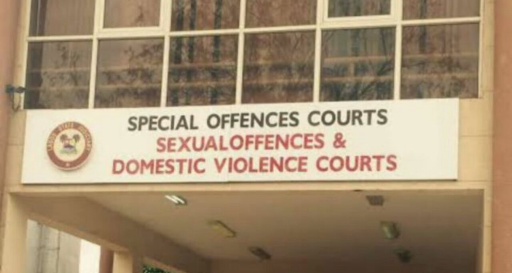
The Lagos State government had alleged that Oyelabi raped his daughter sometime in November 2017 at their residence in Obadore, Igando, Lagos.
Delivering judgment, Justice Oshodi held that the prosecution had failed to establish two essential elements of rape: that the sexual intercourse occurred without the victim’s consent, and that the defendant intended to have intercourse with her without her consent.
The judge noted that the prosecution called only one witness, Assistant Superintendent of Police Iyabo Bakare, who testified that the defendant had admitted to having sexual intercourse with his daughter and impregnating her.
However, after a trial-within-trial, the court rejected the defendant’s written confessional statement, ruling that it was not recorded in accordance with Section 9(3) of the Administration of Criminal Justice Law of Lagos State 2015.
The provision requires such statements to be recorded in the presence of the suspect’s legal practitioner or a member of his family, or by video recording.
Justice Oshodi further held that although the police officer gave direct evidence of an oral admission allegedly made by the defendant before the Divisional Police Officer, the admission did not establish that the sexual intercourse was non-consensual.
He faulted the prosecution for failing to call the alleged victim, whom he described as the only person who could tell the court whether she had consented to the sexual intercourse.
The judge also rejected the police officer’s account of what the alleged victim reportedly told her, describing it as hearsay that could not be relied on to establish a lack of consent.
He further observed that although the police officer claimed to have seen the victim pregnant, no medical evidence was presented to establish the pregnancy or its age. “The medical report allegedly sent to the Gender Unit was also not produced in court.”
Justice Oshodi stressed that proof of sexual intercourse does not automatically establish rape, adding that the prosecution must prove every element of the offence beyond reasonable doubt.
He maintained that the defendant’s decision to rest his case on that of the prosecution did not relieve the state of its responsibility to prove the charge or make inadmissible evidence admissible.
The judge, however, expressed concern about the quality of the prosecution, particularly because Oyelabi had remained in custody since April 16, 2018, while the prosecution called only one witness.
He commended defence counsel Onome Akpeneye for representing the defendant pro bono since his arraignment in December 2021.
Justice Oshodi said cases of this nature deserved better preparation to ensure that available evidence was properly presented to the court and that defendants were not left in custody for years over charges that could not be proved.
He also reiterated the need to establish a Witness Protection Commission, stressing the importance of effective witness protection in administering criminal justice.
The judge ultimately held that the prosecution’s failure to establish the absence of consent created reasonable doubt, entitling the defendant to the benefit of the presumption of innocence guaranteed under Section 36(5) of the 1999 Constitution.
Consequently, he found Oyelabi not guilty and discharged and acquitted him.